
CASE STUDY, UX/UI
sHelfadz invoice portal
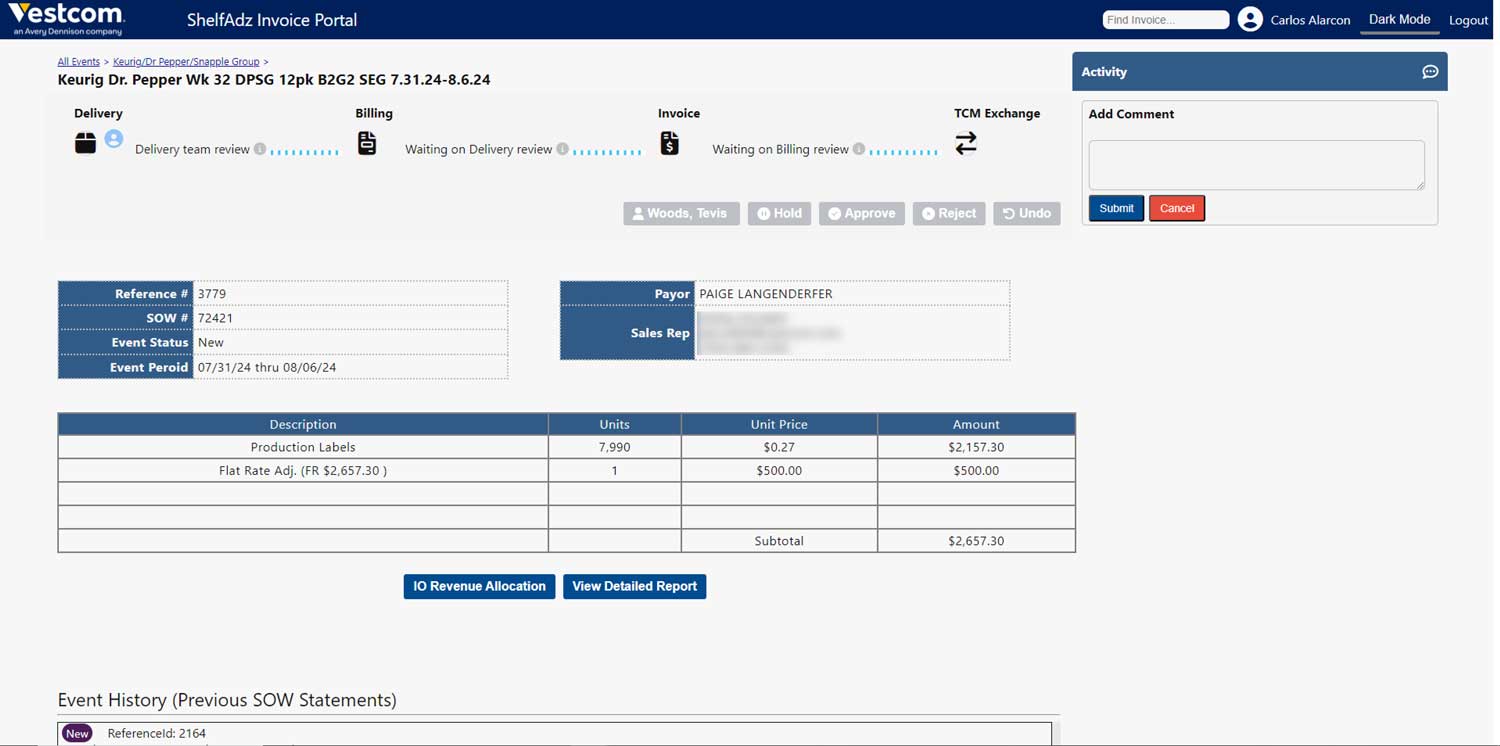
The application shelfAdz Invoice is a billing and tag ordering application built for Vestcom International, part of Avery Dennison.
ROLE:
UX DESIGNER
CLIENT:
Vestcom International, Inc./Avery Dennison
YEAR:
2025
DELIVERABLES:
Wireframes, Landing page, Modular Table
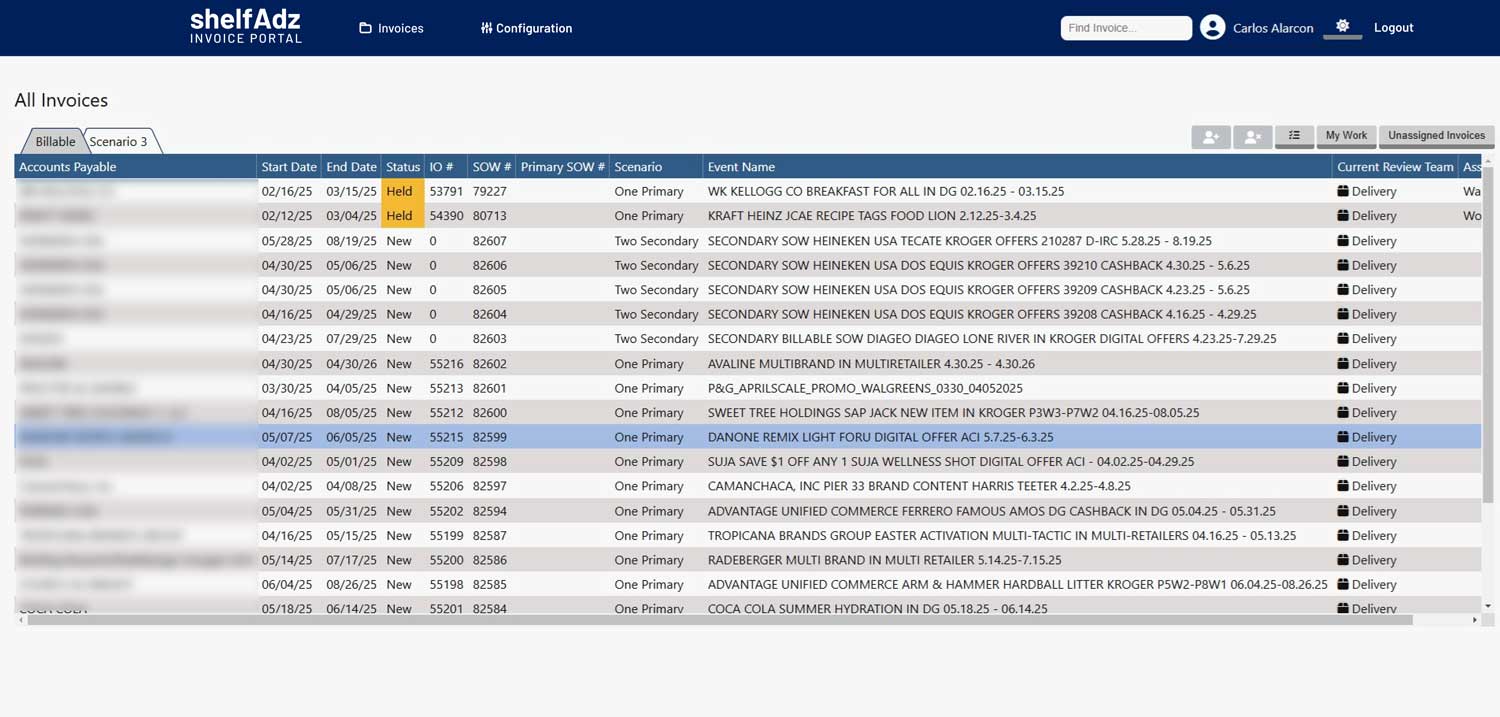
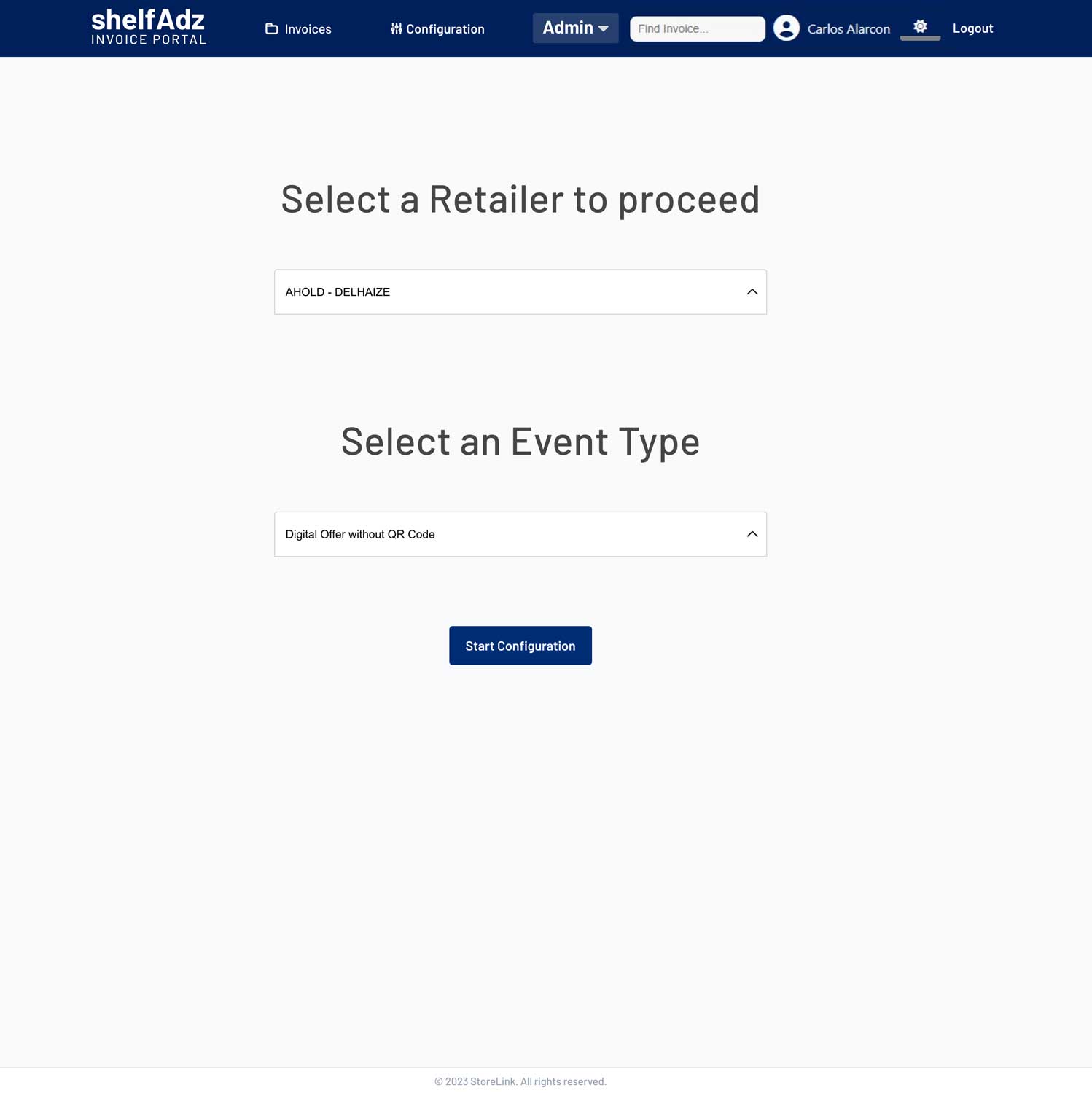
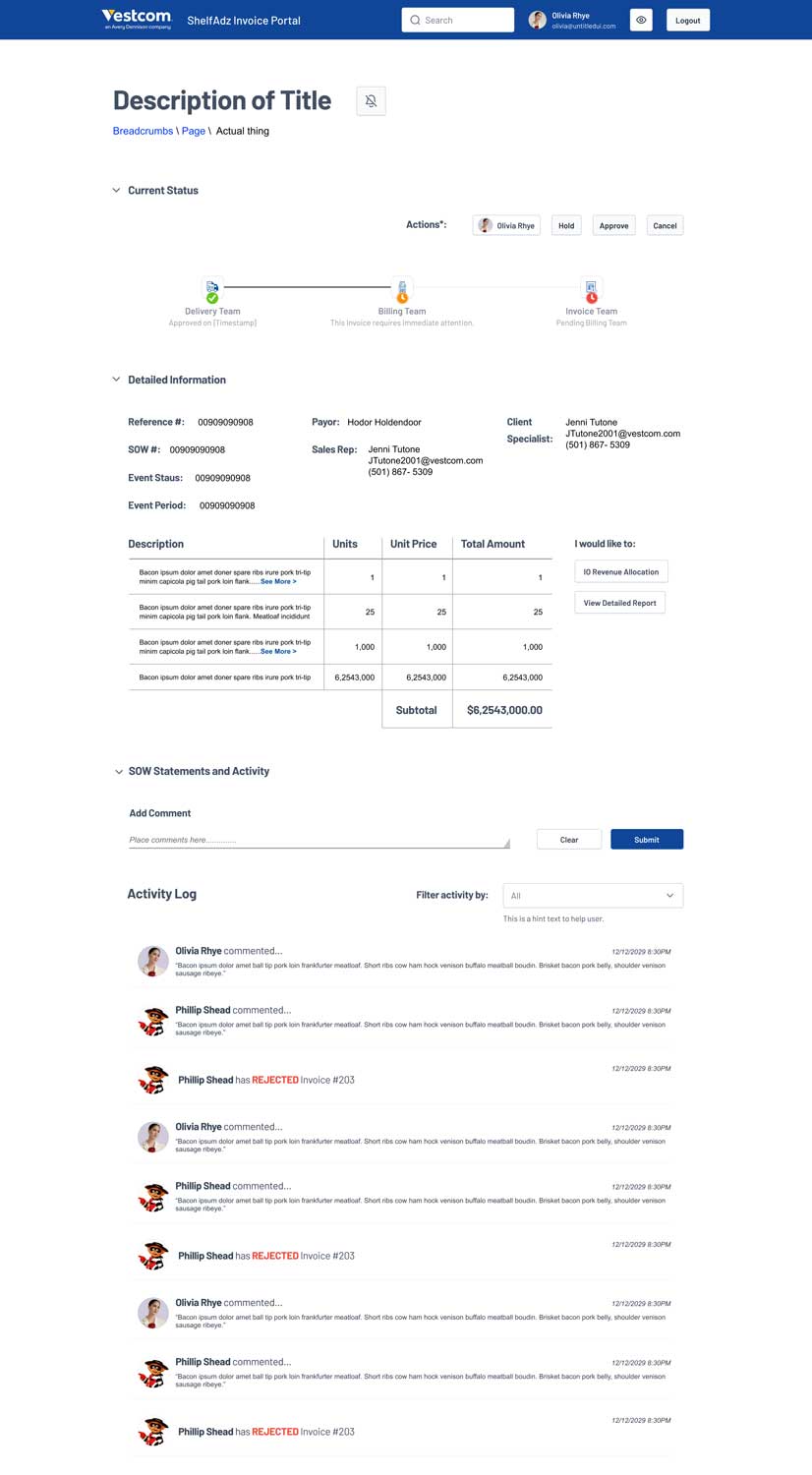
shelfAdz Invoice is a billing and tag ordering experience I designed for Vestcom International, part of Avery Dennison, building on Project StoreLink
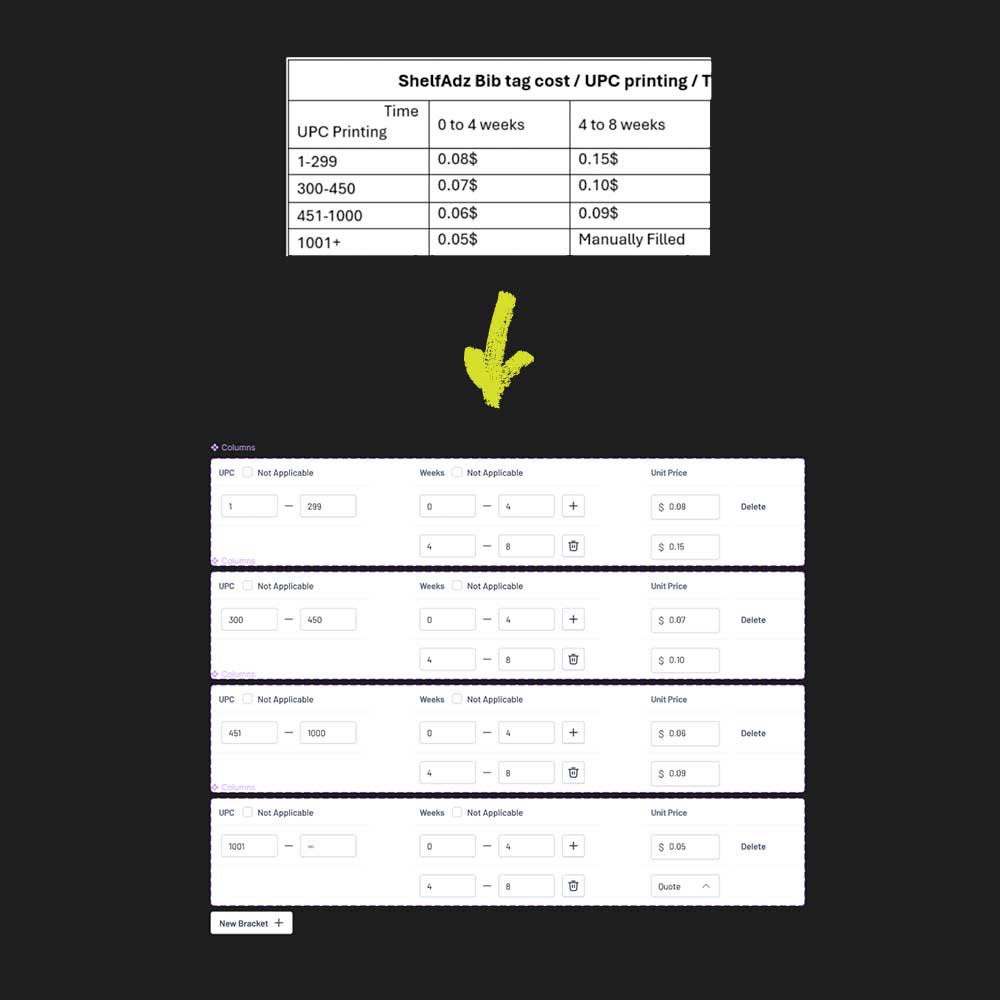
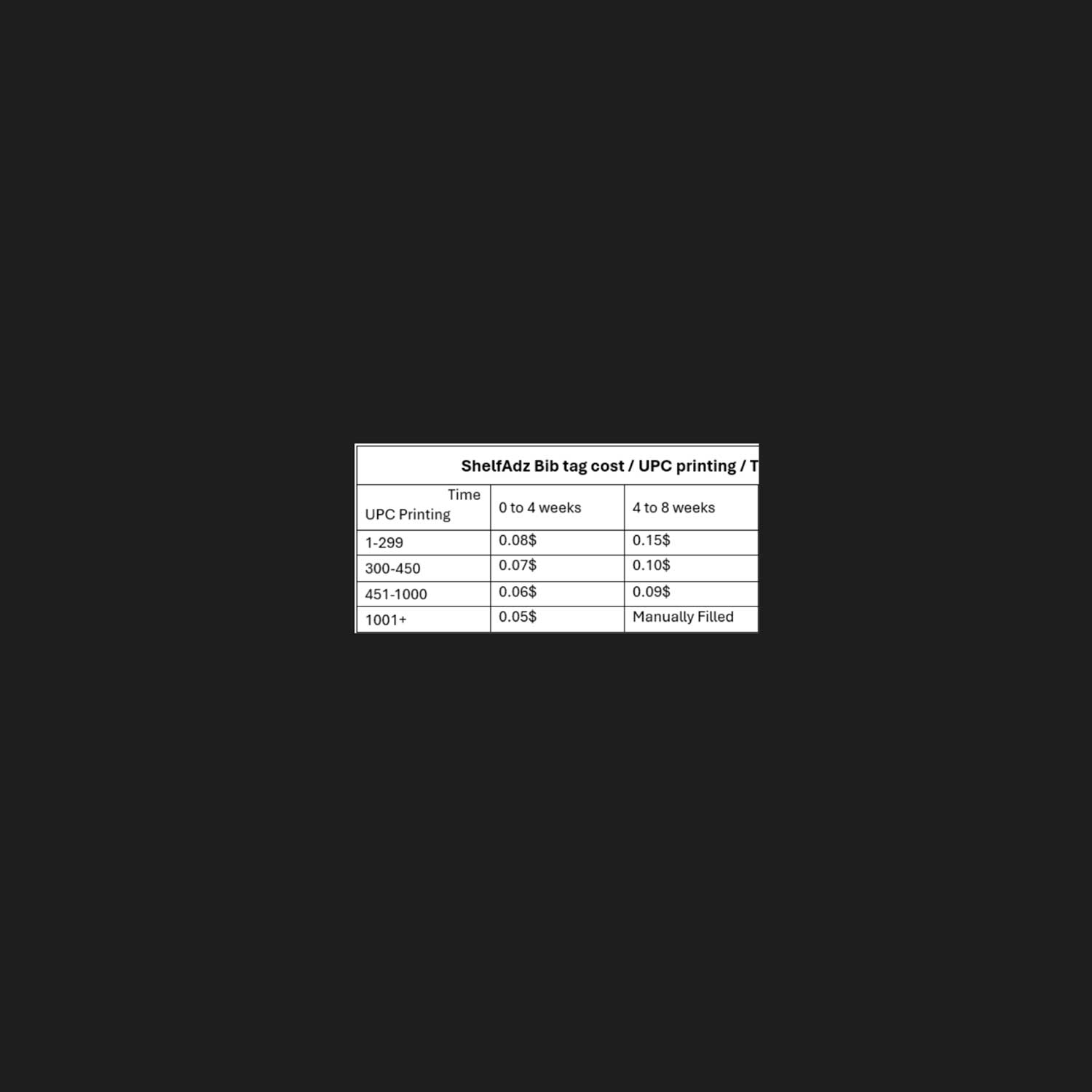
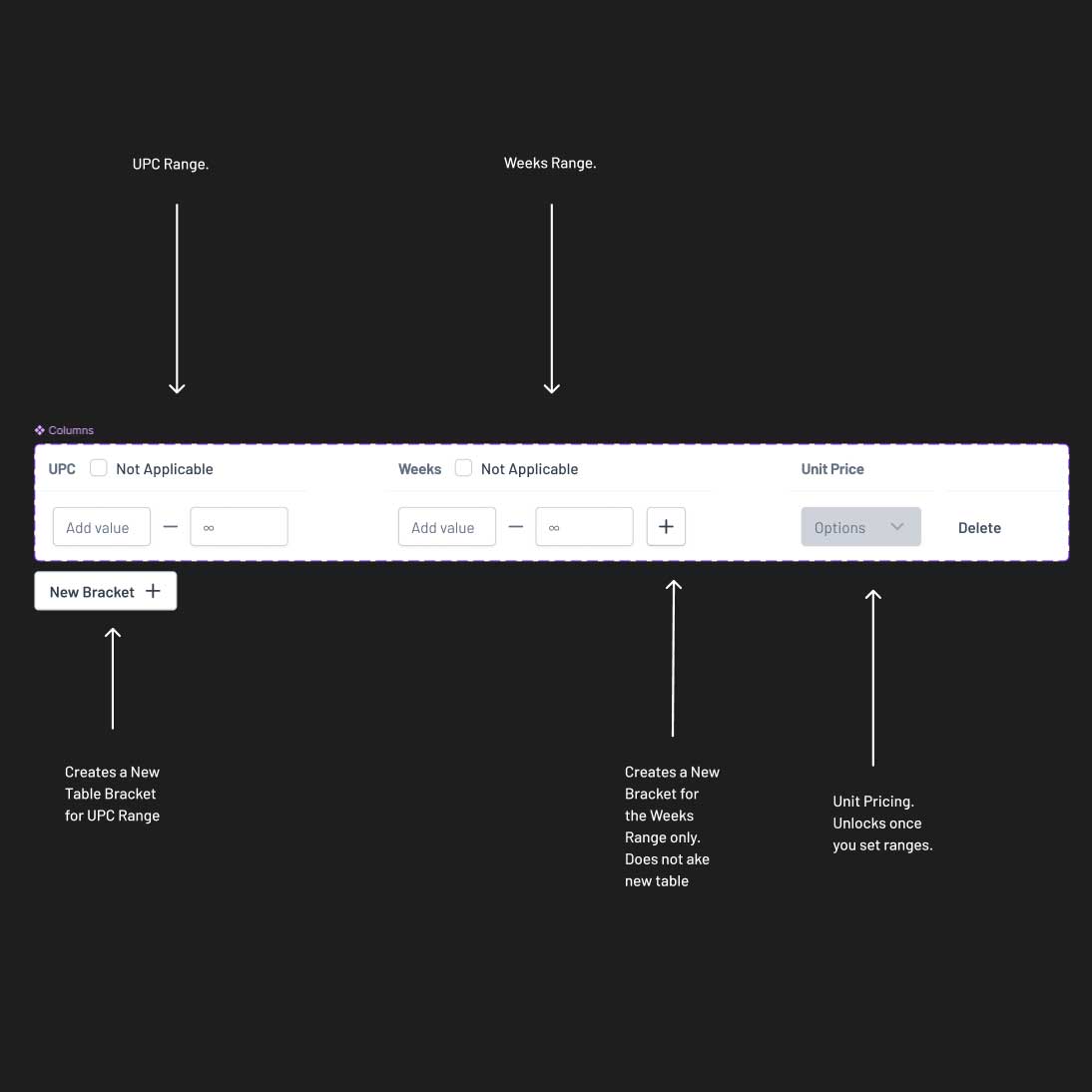
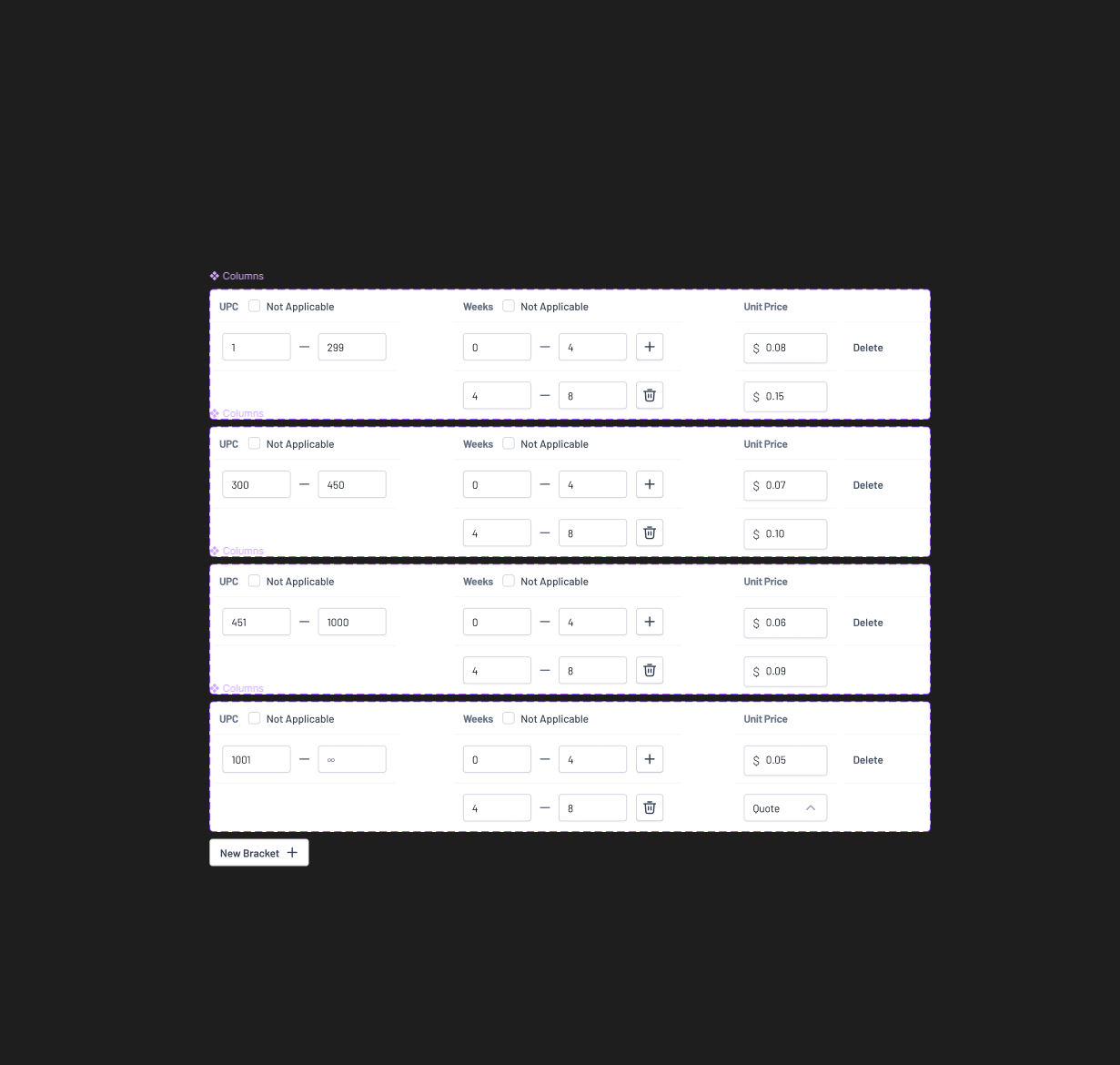
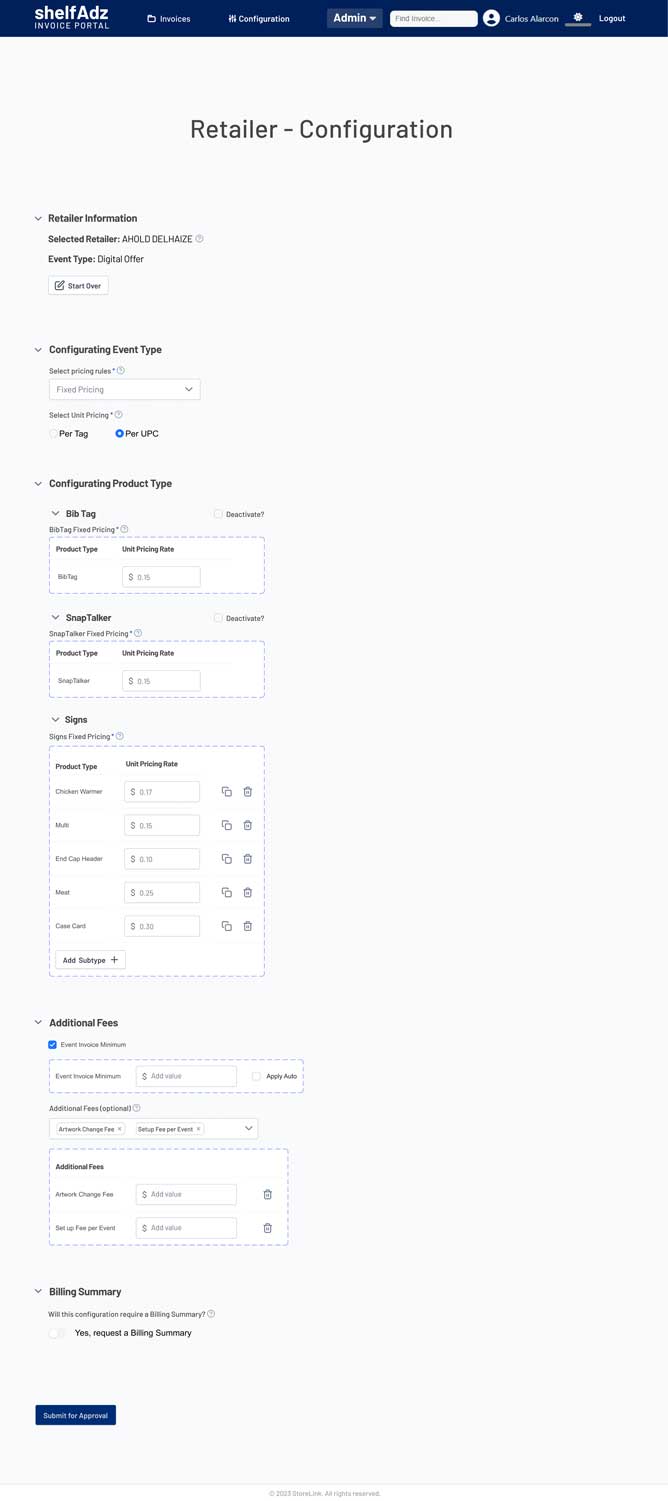
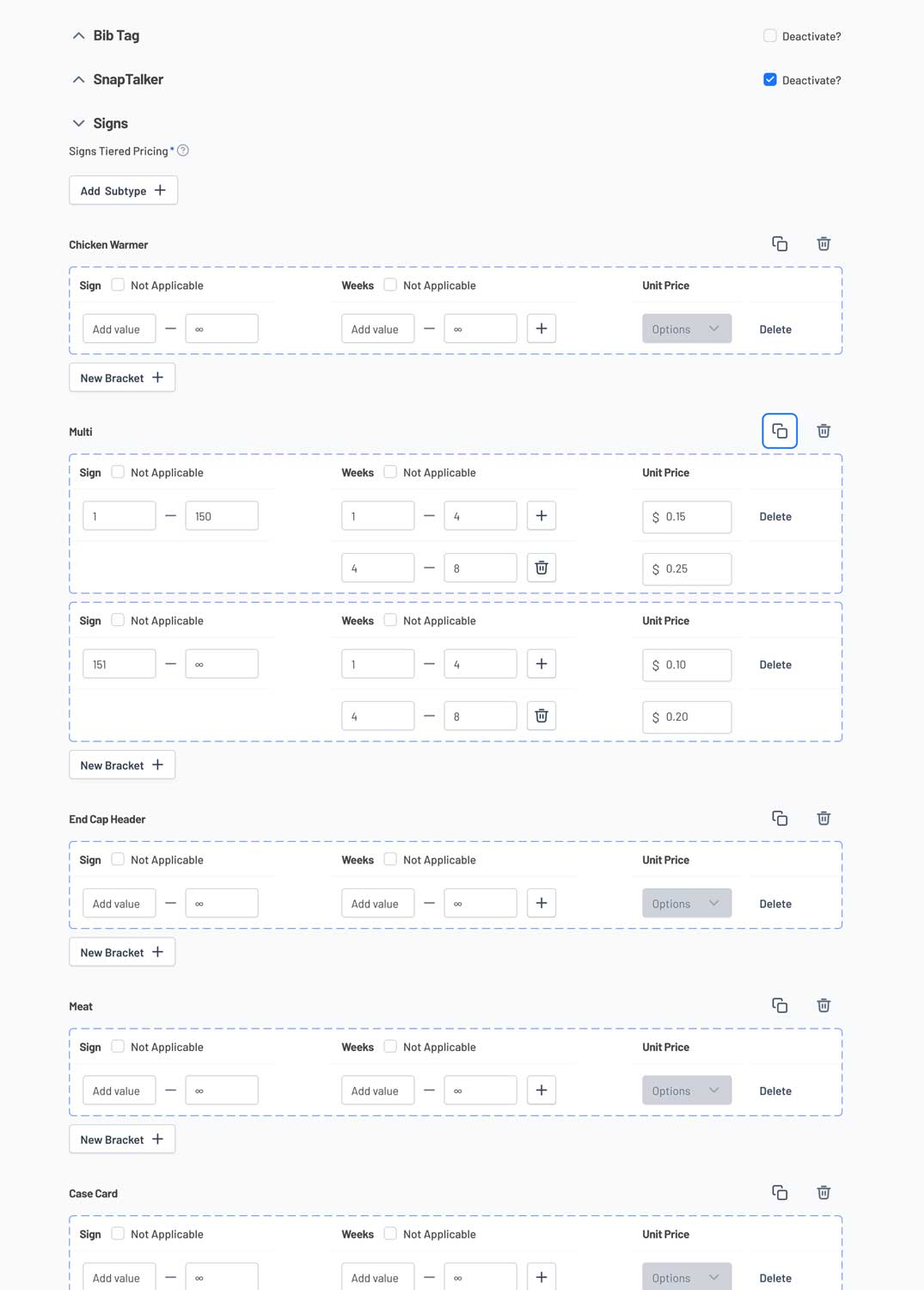
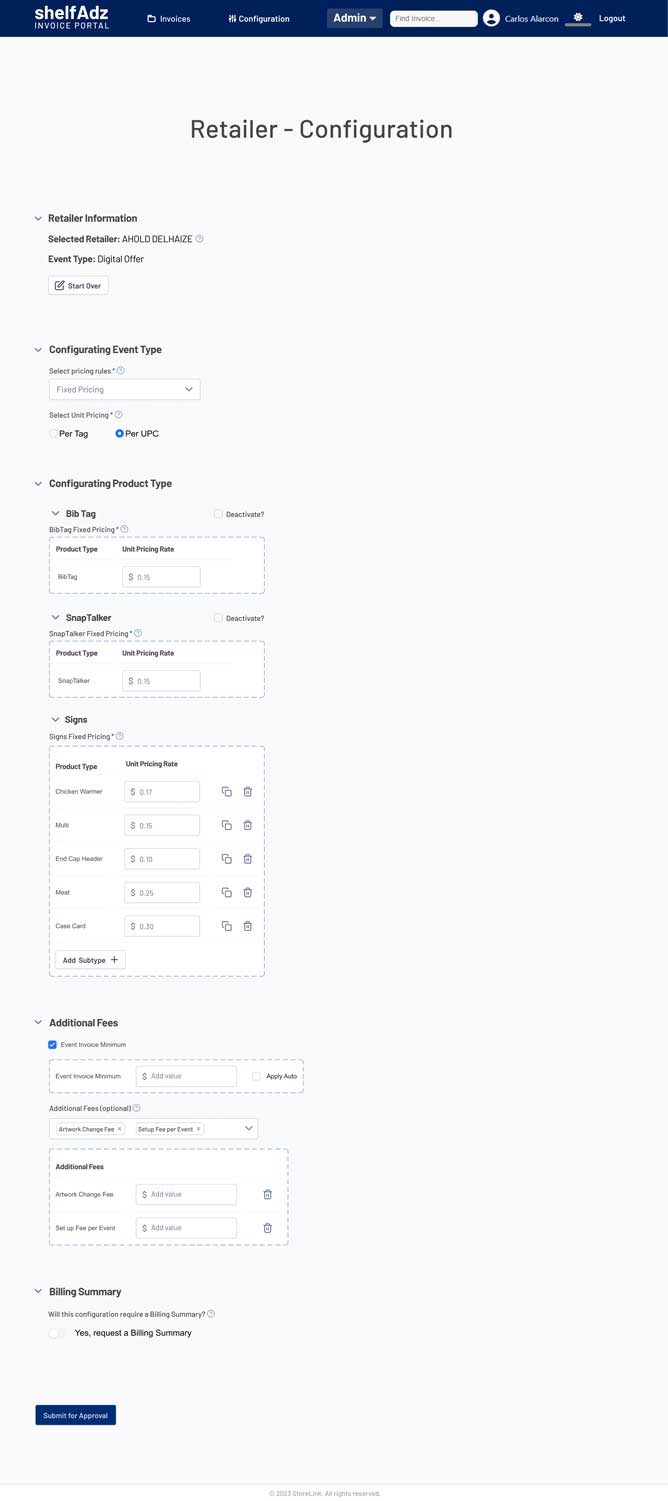
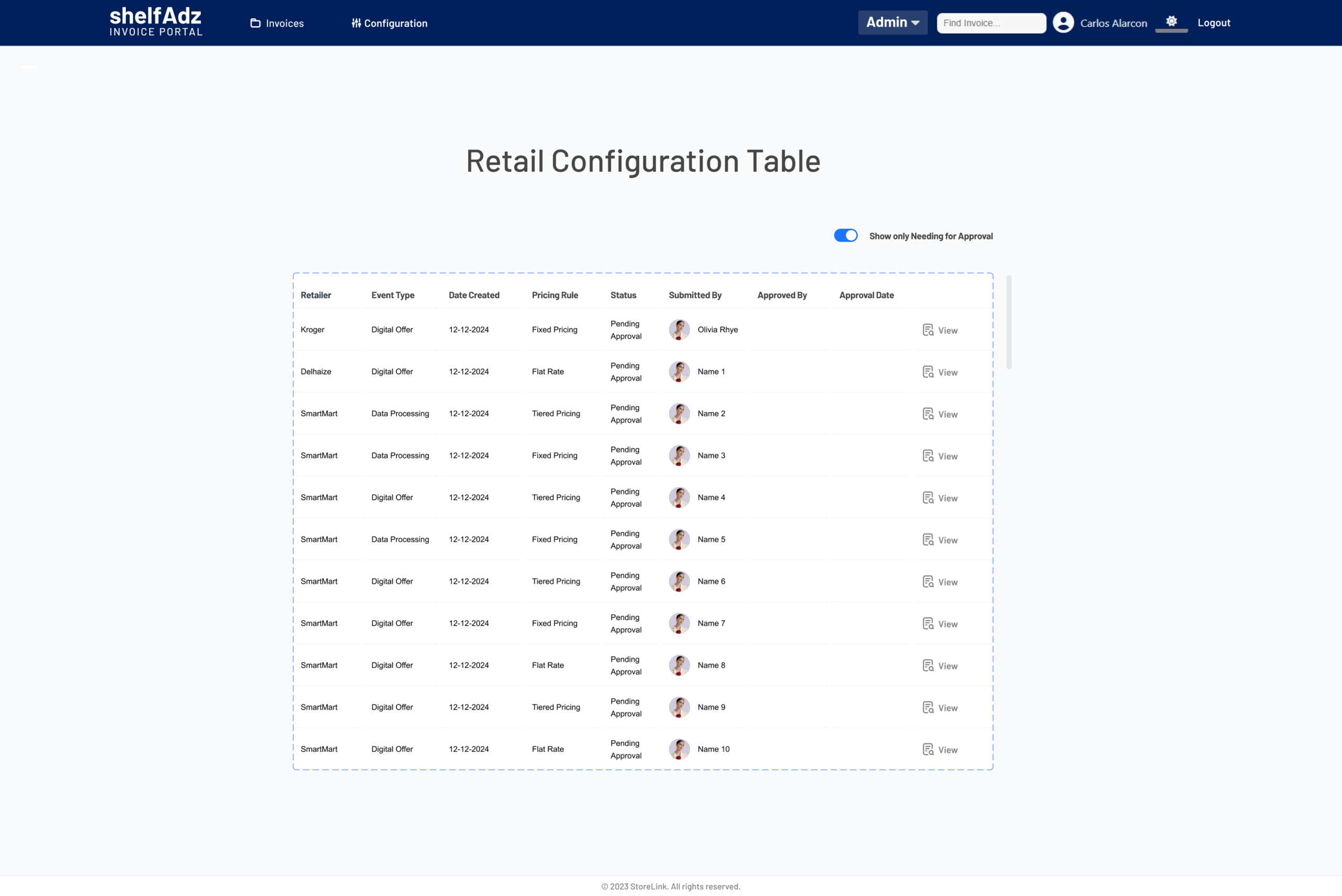
It gives partnered retailers a direct way to order tags and review billable estimates for every campaign, replacing an older process built mostly around Excel and manual entry. At its center is a modular, fully customizable pricing and scheduling system built around an infinite track for quantity and week counts, along with tailored views for retailers, administrators, and internal Vestcom users. Because the interface reused components from StoreLink’s Central Library design system, I was able to spend most of my time solving the configuration problem rather than building a new visual language from scratch.

Product Logo
1. The Challenge
Challenge Breakdown (click to expand)
2. The Solution
Solution Breakdown (click to expand)
3. REFLECTION
Up Next → StoreLink™ by Vestcom
Like what you see?
LET'S MAKE
THE NEXT ONE
I’m open to enterprise UX, design systems, and launch work. Tell me what you’re building.